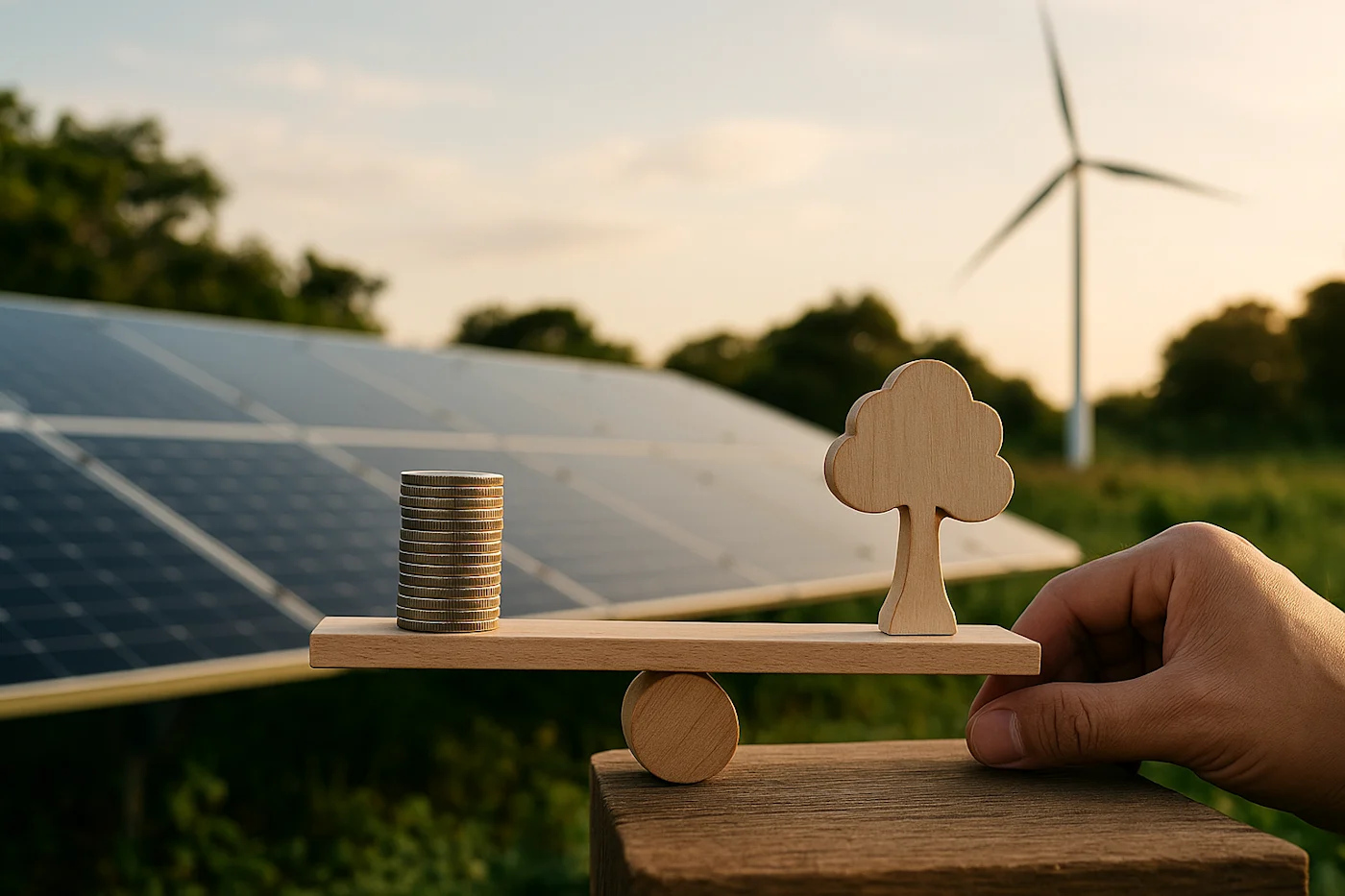
In the 21st century, sustainability has evolved from a choice into a necessity for organisations worldwide. As environmental laws become increasingly stringent and consumers demand eco-friendly products, companies are prioritising environmentally conscious operations. Many have integrated sustainable technologies and practices across their supply chains, production lines, and corporate strategies.
However, while the transition to sustainability offers long-term value, it also presents short-term financial and operational challenges. Balancing the immediate costs of sustainable transformation with the long-term savings it delivers requires careful strategy. This article explores the true cost of sustainability, the associated financial benefits, and the tools organisations can use to manage sustainability costs effectively [1].
Understanding The Cost of Sustainability
Industrialisation over the past two centuries has spurred global economic growth — but at the cost of escalating greenhouse gas (GHG) emissions and accelerating climate change. Historically, many nations adopted a “grow now, clean up later” approach, prioritising development before environmental protection. However, the global climate crisis has made it clear that a “grow and clean up now” approach is essential.
For businesses, this shift means that sustainability carries an upfront cost. These expenditures include investments in eco-friendly technologies, sustainable materials, and compliance initiatives. Yet, these costs must be viewed through a long-term lens, as sustainable practices often yield substantial operational savings and resilience benefits over time [2], [3]. [2], [3].
Costs Associated With Sustainable Development
Sustainability often comes with a price tag, including the acquisition of energy-efficient technologies, resource optimisation tools, and compliance with regulatory frameworks. Key elements contributing to these costs include the following:
A. Hiring Consultants and Staff
Implementing sustainability strategies requires professional expertise. Organisations often begin by assigning sustainability tasks to existing staff and later expand their teams by hiring consultants or dedicated sustainability professionals. These experts play a crucial role in developing and executing greenhouse gas reduction strategies, managing compliance, and embedding sustainability into core business functions. [4].
B. Premium Cost of Sustainable Production
Sustainably sourced raw materials are more expensive than traditionally sourced raw materials, therefore increasing production costs. Moreover, fairer pay across the supply chain, time-consuming production time due to resource shortage, energy-draining shortcuts, and unavailability of unconventional materials all contribute to a rise in production costs [5].
C. Technology Investments
ITechnology investments include investments in energy-efficient equipment, renewable energy sources like solar panels, green building upgrades, and sustainable materials. These systems can be expensive initially and are also criticised for being less efficient or reliable than their traditional counterparts. For example, solar power is dependent on sunlight availability and also doesn’t work at night. Similarly, wind power is intermittent and is also weather-dependent. Furthermore, energy storage solutions are still in the early development phase, and they also present capacity, cost, and environmental constraints [6].
D. Compliance Costs
Adhering to evolving environmental standards such as the Corporate Sustainability Reporting Directive (CSRD) or Task Force on Climate-Related Financial Disclosures (TCFD) requires continuous investment in reporting, audits, and documentation. These costs, though significant, are crucial to maintaining transparency, accountability, and credibility in the global marketplace [5].
The Long-Term Savings from Sustainability
While the initial costs of sustainability can be a hurdle in business operations, the long-term benefits outweigh these concerns. Here are some key areas where businesses can expect long-term significant savings:
A. Reduced Resource Consumption
Sustainability initiatives help businesses optimise resource use. Energy-efficient systems, renewable power sources, and recycled materials lower operational costs. Over time, this resource efficiency results in significant financial savings, particularly in energy-intensive industries [7].
B. Durability and Longevity
Sustainable products are designed for durability and efficiency. Though they may involve higher upfront costs, their extended lifespan reduces replacement frequency and maintenance expenses. For instance, investing in high-quality office infrastructure or advanced manufacturing machinery ensures better productivity and lower long-term costs [7].
C. Competitive Advantage
Today’s consumers prefer brands that reflect their environmental values. Organisations that embed sustainability into their operations gain a distinct competitive advantage, attracting eco-conscious customers and strengthening brand loyalty. Clear communication of sustainability commitments through transparent marketing further enhances consumer trust [8].
D. Technological Advantage
Sustainability-driven technologies, though initially expensive, generate measurable savings over time. Renewable energy investments — such as solar or wind installations — typically deliver returns within five to ten years. Moreover, adopting eco-efficient IT infrastructure and energy management systems reduces operational costs and strengthens environmental, social, and governance (ESG) credibility [9].
Tools and Techniques for Sustainable Cost Management
Sustainable cost management involves balancing environmental and social considerations with financial performance. Organisations can achieve this balance by leveraging innovative tools and methodologies that integrate sustainability into financial planning and operational practices. Below is an exploration of some critical tools and techniques:
1. Life Cycle Cost Analysis (LCCA)
LCCA is a powerful tool to evaluate the total cost of a product, project or process over its entire life cycle, from production to disposal. LCCA helps to identify hidden operational costs, supports investments in energy-efficient technologies, and quantifies long-term financial and environmental benefits. This technique is commonly used in construction, renewable energy projects, and product design to assess long-term savings versus upfront costs. LCCA is a crucial planning tool for organisations to evaluate sustainable future cost management [10].
2. Cost-Benefit Analysis (CBA)
Cost-benefit analysis (CBA) is a technique used to compare the cost of implementing a policy or initiating a project against the expected benefits provided in the future. Environmental CBA refers to provisions of environmental services or actions that might positively or negatively affect the environment under a direct or indirect consequence. CBA gives decision-makers a clear picture of how society and the environment might perform under various policy alternatives for accomplishing certain objectives. This is especially true for the establishment of environmental regulations, as in several countries, cost-benefit analysis plays a key role in both policy formulation and implementation [11].
3. Lean Management Principles
Lean management is a methodology that focuses on eliminating waste and maximising value in a process. It originated from the Toyota Production System and has been widely adopted by various industries. Businesses across sectors may utilise lean concepts and technologies to optimise operations, cut costs, and create more value, all while developing an innovation and excellence culture. Lean principles, when aligned with sustainability goals, help reduce resource consumption and minimise waste. Organisations can integrate lean practices with sustainability initiatives to achieve environmental and economic benefits [12].
4. Energy Management Systems (EMS)
An energy management system (EMS) is the proactive and organised monitoring, controlling, and optimising system of an organisation's energy usage to save money and conserve energy. EMS comprises precise activities such as monitoring of monthly energy bills and enhancing the company’s infrastructure for energy savings. The actions for optimising the energy performance of organisations include installing solar panels, increasing building insulation, and improving HVAC systems for long-term cost and energy savings. With the advancement in technology, organisations are now installing energy and environmental monitoring and management software to enhance the efficiency and smoothing of business operations [13].
5. Data Analytics and Business Intelligence Tools
For achieving maximum productivity, organisations require insights into operational inefficiencies and data regarding cost drivers. Data analytics and business intelligence tools play a critical role in building sustainable cost management and therefore enhancing overall efficiency. These tools help businesses to evaluate large data set patterns or trends and facilitate informed decision-making. For instance, organisations can utilise tools like Microsoft Power BI or Tableau to illustrate and examine energy consumption data, allowing them to identify high-usage areas and apply targeted energy-saving strategies [12].
Conclusion
Sustainable cost management is an important aspect for improving organisational performance besides investing in eco-friendly practices and technologies. There may be a rise in short-term costs related to an environmentally friendly approach. Nevertheless, they come with multiple benefits with long-term savings. Adopting sustainable practices is now becoming compulsory after many regulatory compliances have become enforced. Therefore, hiring trained staff, adopting sustainable production, and getting compliance certifications raise short-term costs. However, in the long term, there are several advantages for companies, like energy savings, a competitive and technological edge over rivals, and overall resource reduction. Businesses may utilise various tools and techniques for achieving sustainable cost management. For instance, implementing lean management principles across organisations, utilising data analytics tools, and integrating energy management systems will enhance overall efficiency and productivity.
How SmartResilience Can Help?
Smart Resilience is a company dedicated to empowering businesses to navigate the challenges of climate change. With a focus on sustainability and long-term progress, we offer tailored solutions to assess and mitigate climate-related risks. Our comprehensive suite of services empowers businesses to combat climate challenges while aligning perfectly with the requirements of the Corporate Sustainability Reporting Directive (CSRD).
Our comprehensive services include:
Physical Risk Assessments: SmartResilience conducts in-depth physical risk assessments, for identifying vulnerabilities to extreme weather events and other climate-related hazards. These assessments directly address the CSRD's mandate for climate risk disclosure and potential impacts.
Scenario Analysis: SmartResilience scenario analysis tools evaluate the impact of diverse climate scenarios on your business operations. By strategically considering various possibilities, you can plan for the future, enhance financial resilience, and align seamlessly with the CSRD's mandate for future-proof planning.
Risk Management Strategies: SmartResilience goes beyond identification by developing comprehensive and tailored risk management strategies. Our solutions safeguard businesses against climate change impacts, emphasising the CSRD’s call for proactive adaptation measures.
Ongoing Compliance Support: SmartResilience provides continuous support to ensure your sustainability reporting remains compliant with evolving CSRD requirements. Our services include regular updates to reflect the latest regulations, staff training to maintain expertise, and vigilant monitoring for accurate and up-to-date disclosures.
Partnering for a Sustainable Future:
The future may be uncertain, but by building resilience together, we can address climate change with confidence and clarity. Contact us today to embark on a journey towards a sustainable future.
References
[1] Forbes, “17 Sustainability Initiatives Of Businesses That Are Going Green,” Forbes. [Online]. Available: https://www.forbes.com/councils/forbesbusinesscouncil/2023/11/21/17-sustainability-initiatives-of-businesses-that-are-going-green/
[2] P. Ekins and D. Zenghelis, “The costs and benefits of environmental sustainability,” Sustain. Sci., vol. 16, no. 3, pp. 949–965, May 2021, doi: 10.1007/s11625-021-00910-5.
[3] Faster Capital, “What Is Cost Of Sustainability And Why Is It Important,” Faster Capital. [Online]. Available: https://fastercapital.com/keyword/what-is-cost-of-sustainability-and-why-is-it-important.html
[4] L. Steinbrink, “Understanding the Costs of Your Sustainable Journey,” Emerald Built Environments. [Online]. Available: https://blog.emeraldbe.com/new_blog/understanding-the-costs-of-your-sustainable-journey
[5] J. Schmidt, “The Cost of Sustainability | Pricefx,” Price FX. [Online]. Available: https://www.pricefx.com/learning-center/the-cost-of-sustainability
[6] Gyatk, “The Cost of Green: Exploring the Drawbacks of Sustainable Solutions,” LinkedIn. [Online]. Available: https://www.linkedin.com/pulse/cost-green-exploring-drawbacks-sustainable-solutions-gyatk-munpc
[7] Belynda, “The Economics of Sustainable Products: Balancing Costs and Long-Term Savings,” askBelynda. [Online]. Available: https://www.askbelynda.com/post/the-economics-of-sustainable-products-balancing-costs-and-long-term-savings
[8] N. Reichenbach, “Investing In Sustainability: Long-Term Benefits For Businesses,” Forbes. [Online]. Available: https://www.forbes.com/councils/forbesbusinesscouncil/2023/12/11/investing-in-sustainability-long-term-benefits-for-businesses/
[9] E. van Laarhoven-Smits, “How will investing in sustainable IT cut your costs in the long term?,” Ernst & Young Limited. [Online]. Available: https://www.ey.com/en_ch/insights/sustainability/how-will-investing-in-sustainable-it-cut-your-costs-in-the-long-term
[10] J. Haney, “Life Cycle Cost Analysis (LCCA),” ServiceChannel. [Online]. Available: https://servicechannel.com/glossary/life-cycle-cost-analysis/
[11] OECD, Cost-Benefit Analysis and the Environment: Further Developments and Policy Use. OECD, 2018. doi: 10.1787/9789264085169-en.
[12] Faster Capital, “Sustainable Cost Management,” Faster Capital. [Online]. Available: https://fastercapital.com/startup-topic/Sustainable-Cost-Management.html
[13] IBM, “What is Energy Management?,” IBM. [Online]. Available: https://www.ibm.com/topics/energy-management